

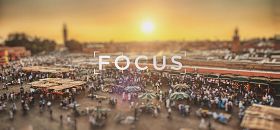

Focus Africa
Leaders from politics, economics and finance met in Dakhla as part of the Crans Montana Forum.
The goal is to celebrate the continent dedicated to the 21st Century Africa.
Focusing on increasing stability, cohesion and solidarity for sustainable development, the third Crans Montana Forum focused on Africa and cooperation in the southern hemisphere.
More than a thousand participants from around the world were at the event and addressed political and institutional communication issues around Africa.
“We have come here to carry out a broad reflection on the potential of cooperation in the southern hemisphere Africa in the 21st century. This year, we are talking about food security and sustainable agriculture. There are many areas where Morocco has succeeded in building channels of excellence. It has used them to help develop its territories and offer a renewed vision of international cooperation based on mutual respect and equality,” Pierre-Emmanuel Quirin, President, Crans Montana Forum.
Forum delegates focused on the challenges surrounding Africa’s development and the opening of new hubs for cooperation.
“Eleven percent of business trade in Africa is within African countries. It’s too little. Our target must be to be improve (increase) that, to much, much higher than that. That really is my focus and my message. Most of the business communities would go back here and ask how do we do more within Africa than Africa and Europe, or America,” Dr Abubakar Bukola Saraki, Nigeria Senate President.
Agriculture and economy ministers discussed how to raise the international community’s awareness of the challenges surrounding sustainable agriculture.
“Many people in African countries are experiencing hunger, which is shameful given the technology and innovative proposals made by Africans themselves. Africa needs to address issues of water and agriculture,” Hakima El Haite, Moroccan Environment Delegate Minister.
Another key issue at the Forum was the integration of women into the decision making process and the impact this may have on economic and social progress.
“We talked about the problems that Arab women have faced, and we found that its same problems generally faced by African women. Poverty, the lack of education and health. Solutions need to be found to rescue African women from the situation in which they live, through education and investment in agriculture,” Sheikha Hissah Saad Al-Salem Al-Sabah, Princess of Kuwait and Chair of Arab Businesswomen Council.
The work of some personalities, such as the president of the Women’s Collective against Clandestine Immigration in Senegal, were recognised.
“My story began when I lost my child, my only son, at sea, when he left Senegal in a craft boat, to rally the Spanish coast to seek a better life. To raise awareness among young people, coastal communities about the dangers of this scourge,” Yayi Bayam Diouf, Women Against Illegal Immigration in Senegal.




01:32
Africa Cup of Nations moves to 4-year cycle
00:54
Spanish police evict hundreds of mostly illegal migrants living in a squat
01:06
Trump administration expands U.S. travel ban to five more countries
Go to video
Ethiopia eyes sea access amid rising tensions
01:11
Malaria deaths, cases surged in 2024 with gains at stake - Report
00:00
Pope Leo says he hopes to visit Africa in 2026 as he wraps up his first foreign trip